

Flutterwave
Connect Flutterwave to PayLexer to accept card payments, mobile money, bank transfers, and digital wallets across Africa and globally.
Flutterwave is an Africa-based payment technology company providing payment infrastructure for businesses across Africa and globally. It supports card payments, mobile money, bank transfers, and digital wallets for businesses operating in African and international markets.
- Supported Regions (Merchant Accounts): Nigeria, Ghana, Kenya, South Africa, Uganda, Tanzania, Rwanda, Zambia, and other African countries, plus United States, United Kingdom, and Europe - view full list
- Supported Currencies: NGN, GHS, KES, ZAR, UGX, TZS, RWF, ZMW, USD, GBP, EUR, and more - view full list
Supported Features
- One-time payments
- Refunds
- Real-time payment status updates
- Multiple payment methods (cards, mobile money, bank transfers, USSD)
- Recurring billing
- Multi-currency support
Before You Start
Make sure you have:
- Flutterwave Business Account – Don't have one? Sign up for Flutterwave →
- PayLexer Account – Required to configure the integration. Create your account →
- A website where you want to integrate
Looking for a different payment processor? View all supported gateways →
Configuring Flutterwave
You need a Public Key, Secret Key, and Secret Hash from Flutterwave for this integration.
Getting API Credentials
Log in to Flutterwave
Log in to your Flutterwave Dashboard.
Navigate to API Keys
Go to Settings → API Keys.
Copy your credentials
Copy your Public Key, Secret Key, and Encryption Key.
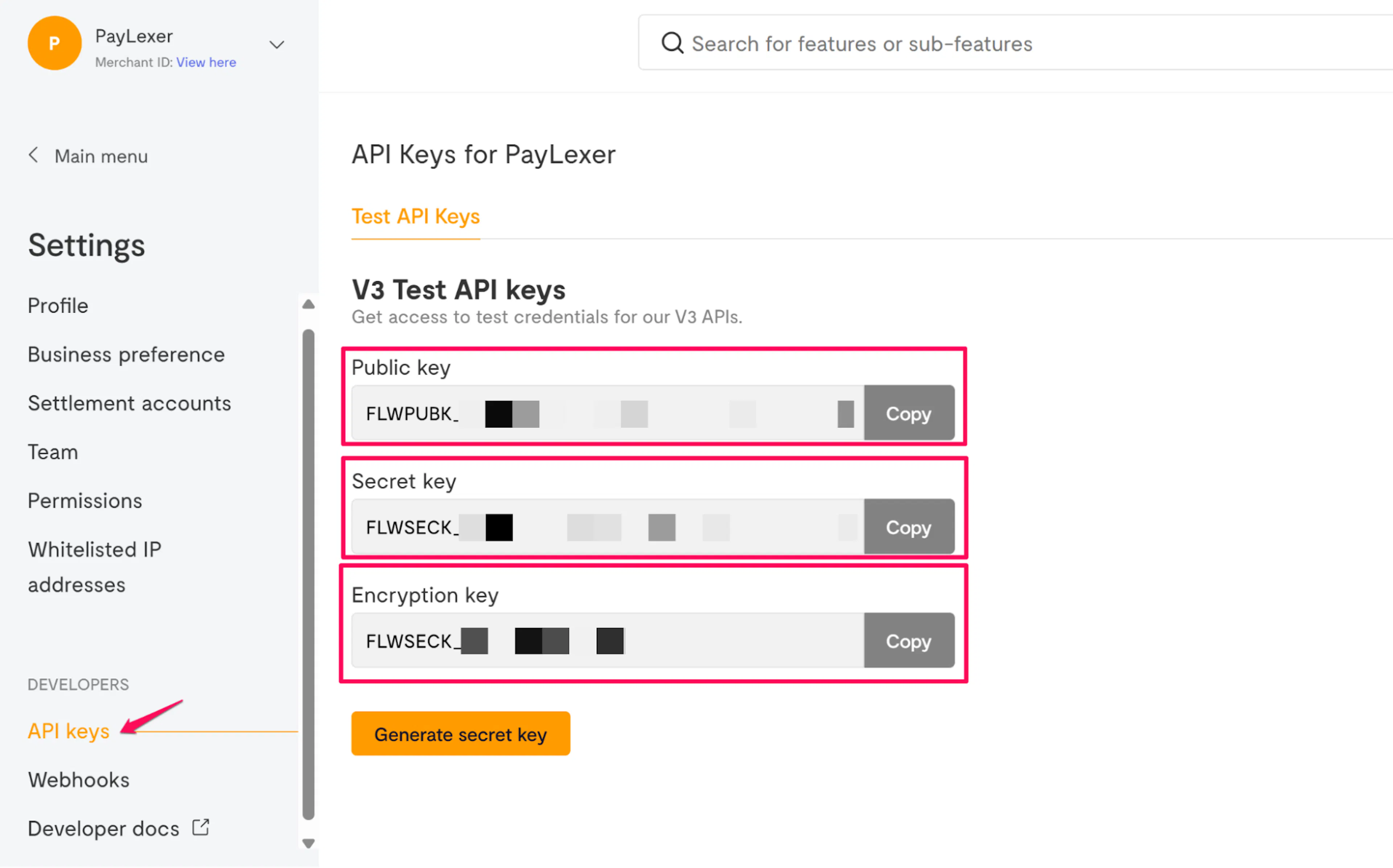
Save your Secret Hash securely - you'll need it for both the Flutterwave dashboard and PayLexer configuration.
Flutterwave provides separate credentials for Test and Live environments. Configure credentials in both environments to enable full testing.
Adding Credentials to PayLexer
Open PayLexer Dashboard
Log in to your PayLexer dashboard and navigate to Payment Gateways → Flutterwave.
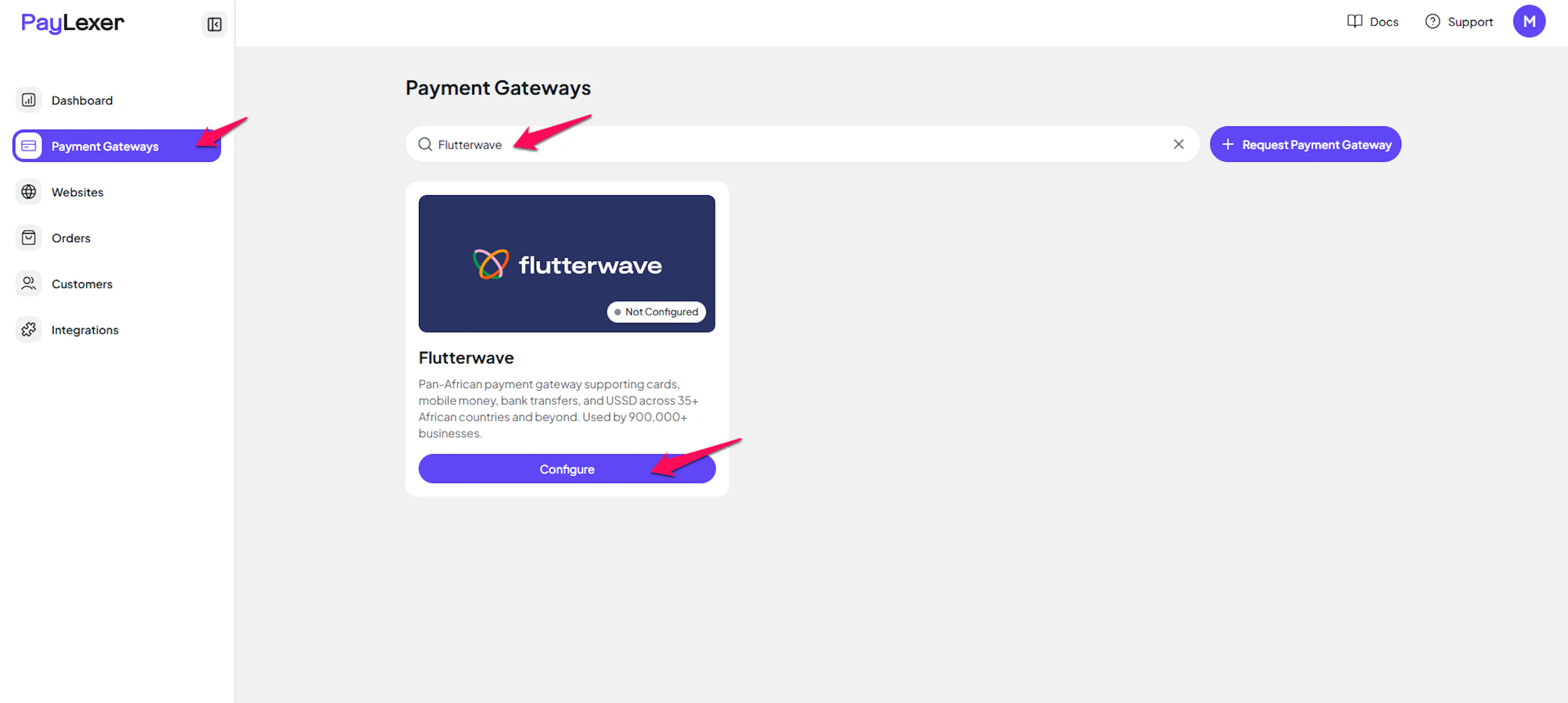
Enter your credentials
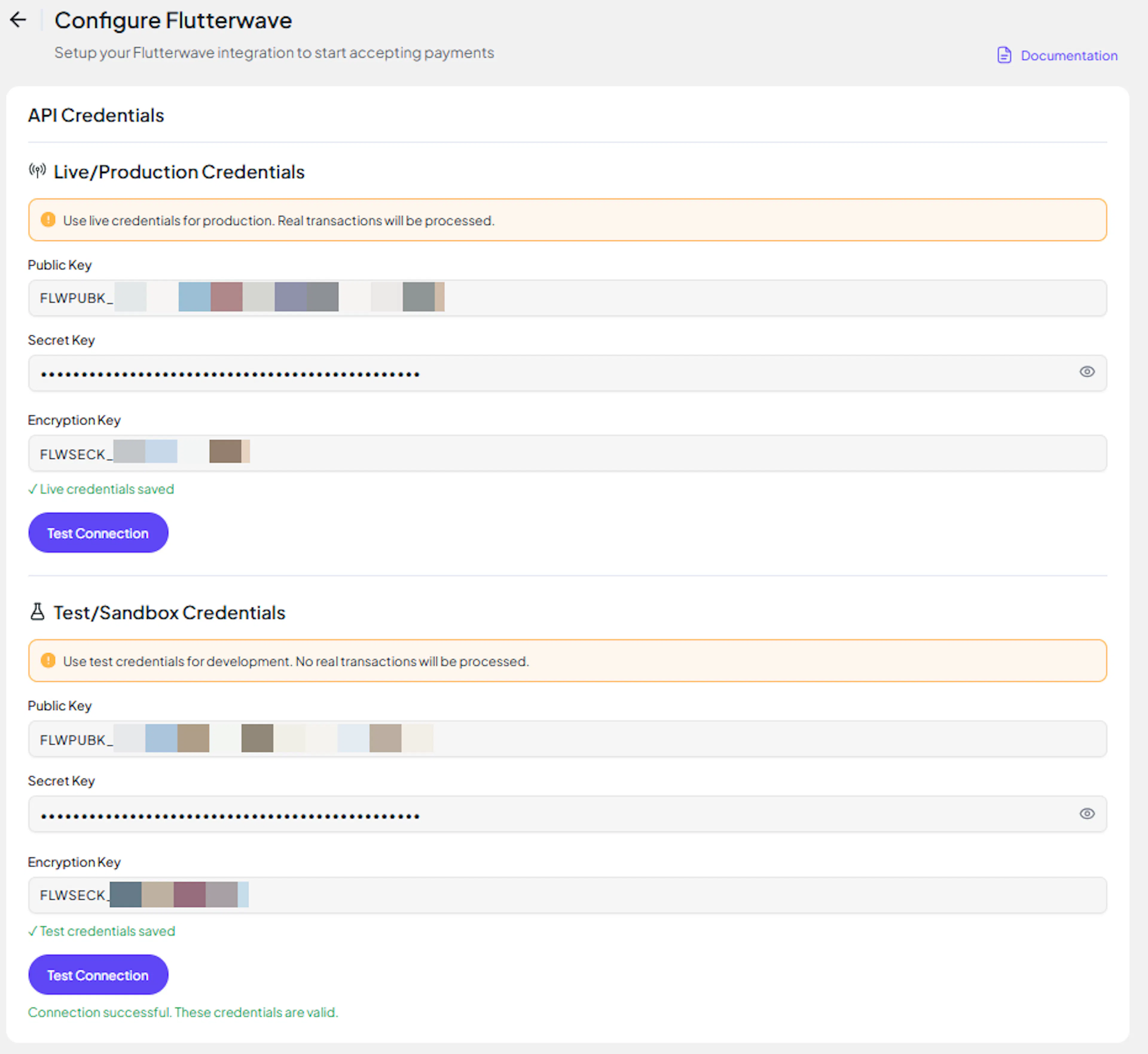
Paste the credentials you copied from Flutterwave.
Understanding Live/Production and Sandbox Settings:
| Environment | Purpose |
|---|---|
| Live / Production (Mandatory) | Used for real transactions. Cannot be empty, even when testing. |
| Test / Sandbox (Optional) | Used for testing only. No real money is processed. |
How PayLexer selects credentials:
- Debug/Test mode ON → Test credentials are used
- Debug/Test mode OFF → Live credentials are used
You do not need to manually switch keys once both environments are saved.
Test and save
Click Test Connection to verify your credentials, then click Save Configuration.
Setting Up Webhooks
Flutterwave supports webhooks for real-time payment notifications and event updates.
Benefits of Webhooks:
- Instant payment status updates
- Automatic refund processing
- Real-time transaction event notifications
- Mobile money payment confirmations
- Bank transfer status updates
Webhook events sent by Flutterwave include:
- Payment completed / failed
- Refund processed
- Transfer completed
- Subscription created or canceled
Flutterwave uses Secret Hash for webhook verification. All webhook notifications include a signature in the request header that PayLexer validates using your Secret Hash.
Webhooks must be configured in your Flutterwave Dashboard. PayLexer provides the webhook URL - you'll need to add it to Flutterwave manually.
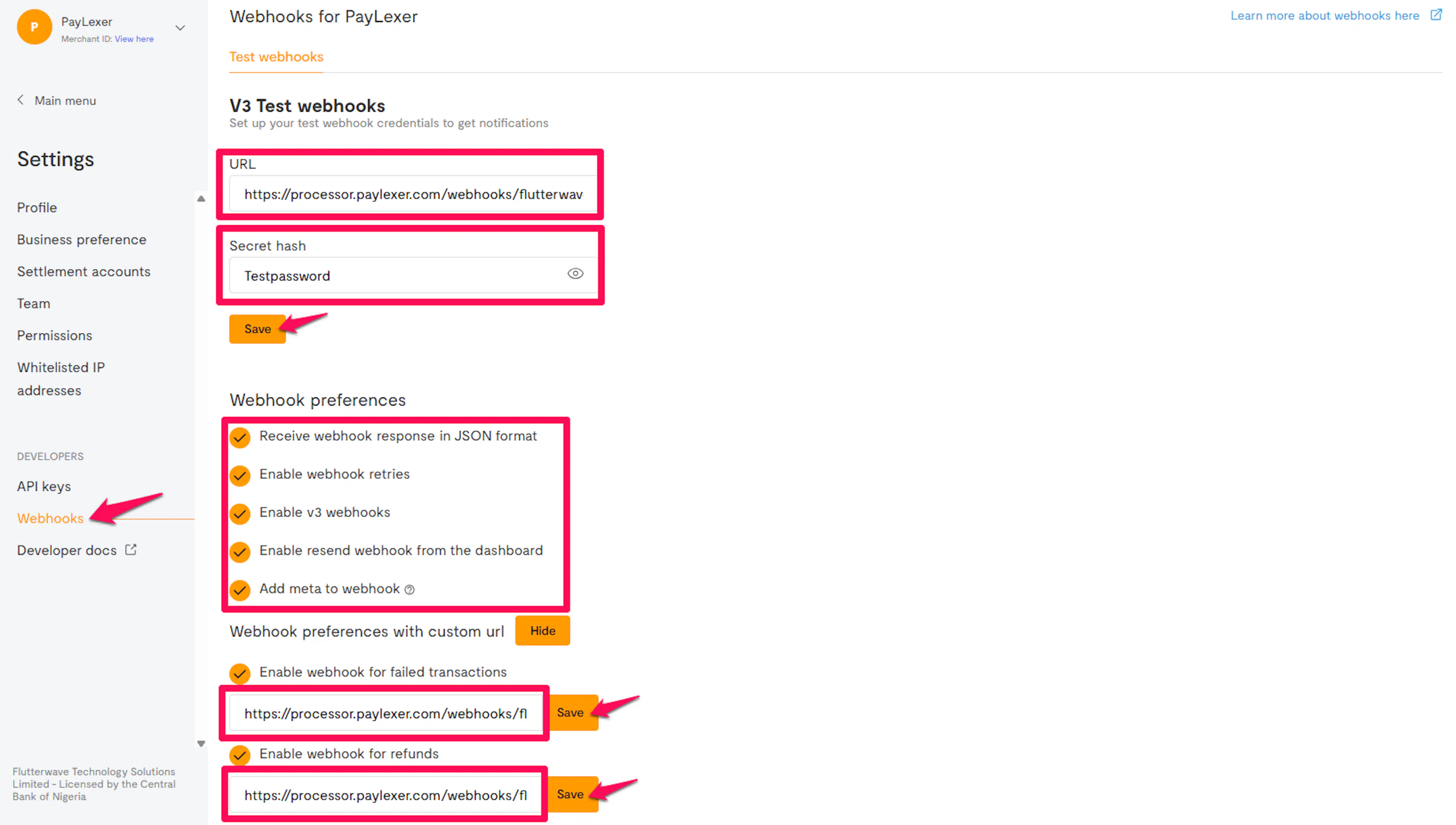
Open Flutterwave Webhooks
Log in to your Flutterwave Dashboard and go to Settings → Webhooks.
Add the Webhook URL
Copy the Webhook URL from PayLexer and paste it into the URL field in Flutterwave.
Set Secret Hash
Enter a Secret Hash of your choosing, select your webhook options, and enter the Webhook URL from PayLexer for failed transactions and refunds. Click Save.
Save in PayLexer
Paste the Secret Hash you created into PayLexer, then click Save Configuration.
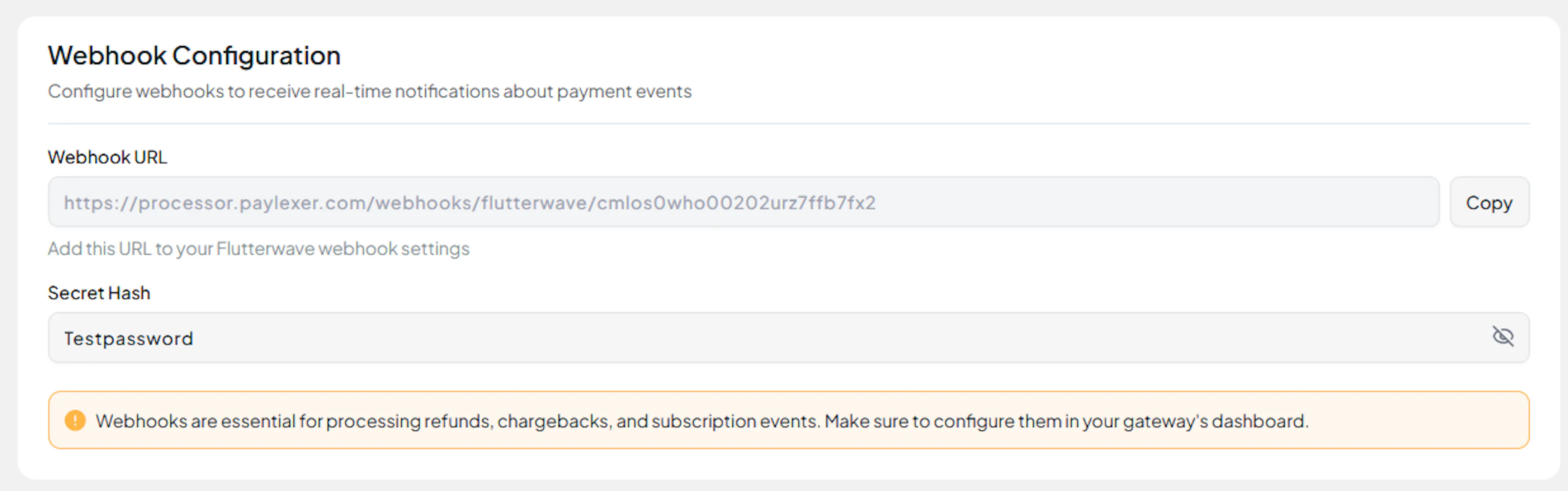
You must configure webhooks for both Test and Live environments separately.
Integrate Flutterwave to Your Website
If you have already added and configured your site, you can enable Flutterwave in your existing setup.
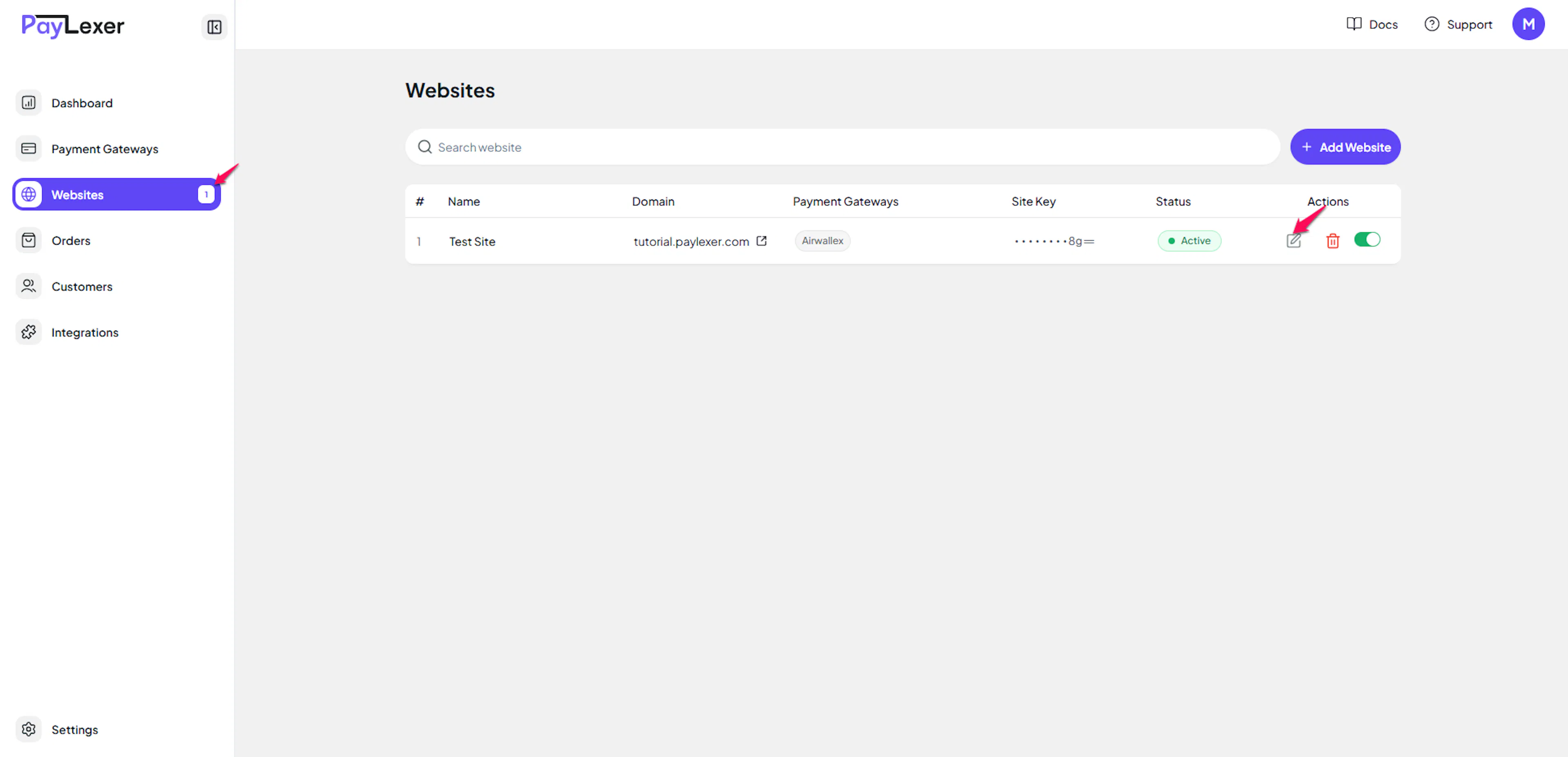
Go to Websites
Navigate to Websites in your PayLexer dashboard.
Edit your website
Click the Edit Icon of your added website.
Enable Flutterwave
Click on the checkbox to enable Flutterwave for the website.
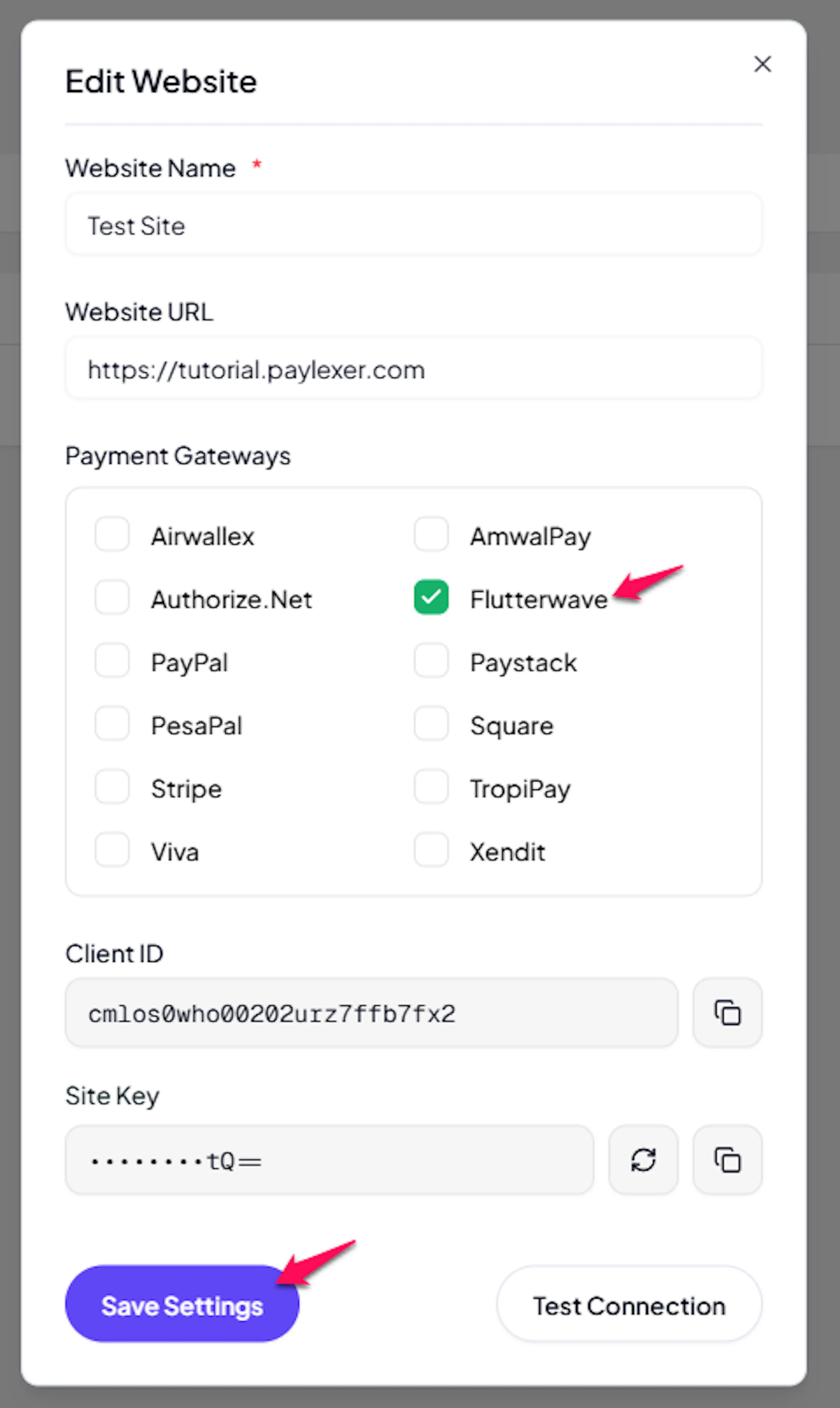
If you haven't added a website yet, Continue to Add Your Website →
Troubleshooting
Best Practices
- Test in Test mode before enabling Live mode
- Validate the first live transaction after switching
- Configure webhooks in both Test and Live environments
- Confirm webhooks are working by checking event logs in Flutterwave Dashboard
- Monitor the gateway dashboard for failed payments
- Keep API credentials and Secret Hash secure
- Use separate Test and Live credentials
- Use the same Secret Hash in both Flutterwave Dashboard and PayLexer for webhook verification
FAQs
Still Have Questions?
- PayLexer Support: Contact Support
- Flutterwave Support: Flutterwave Help Center